


Rediscovering Creativity: The Joy of In-Person Art Classes

Updated: Aug 10

In a world increasingly shaped by screens, on-demand content, and digital efficiency, learning a new skill online has never been easier. Yet, despite the convenience of virtual tutorials and recorded classes, in-person creative courses continue to hold a quiet but enduring appeal. There is something profoundly human about learning creativity this way—something that cannot be downloaded, paused, or sped up.
The Intentional Journey of In-Person Learning
Attending an in-person creative course begins with a physical act of intention. You leave the house, travel to a studio or workshop space, and step away from the rhythms and responsibilities of everyday life. That change of environment matters. It signals a shift in pace, allowing your attention to settle and your focus to return. Unlike online learning, often fragmented by notifications and interruptions, in-person courses create a clear boundary around your time. For a few hours, you are present, undistracted, and fully engaged in the act of making.
The Tactile Nature of Creativity
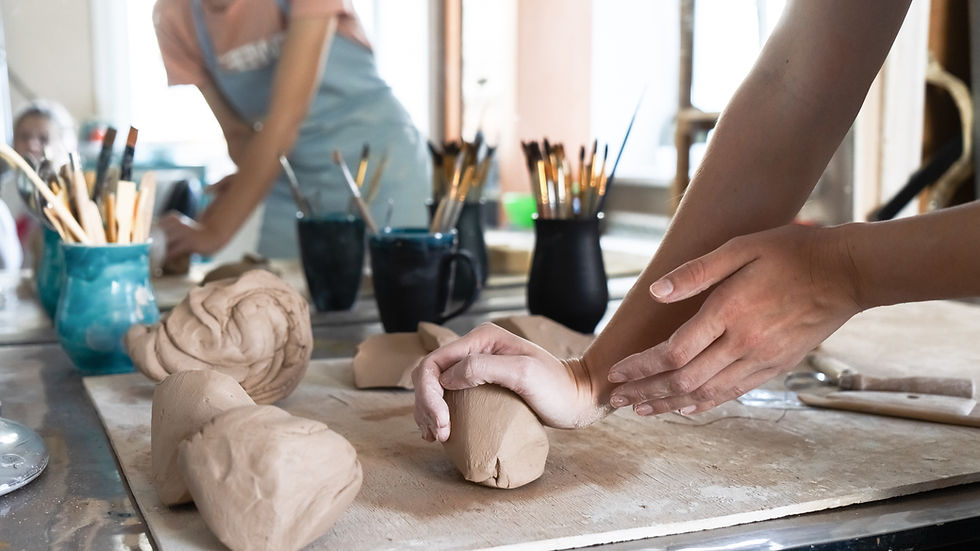
Creativity itself is deeply tactile. It lives in texture, pressure, movement, and instinct. Learning in person allows these elements to be experienced fully. Colours appear as they truly are, materials behave in subtle and unpredictable ways, and techniques are understood through observation as much as explanation. In an in-person art course, you do not simply watch a process unfold; you feel it. This sensory richness plays a vital role in building both understanding and confidence. It is one of the key reasons why in-person creative learning remains so effective.
The Comfort of Shared Creativity
There is also a distinctive comfort in creating alongside others. Sitting at a shared table, each person immersed in their own work, creates a sense of quiet solidarity. Conversations emerge naturally, often drifting between technique, everyday life, and long-held creative ambitions. Importantly, in-person creative courses remove much of the pressure that surrounds creativity online. There are no curated outcomes or polished performances—only real work unfolding in real time. For beginners or those returning to creativity after a long pause, this atmosphere can feel both reassuring and liberating.
The Responsive Nature of Teaching
The nature of teaching in an in-person setting reflects this same sense of exchange. Learning happens responsively, shaped by what unfolds in the room rather than delivered according to a fixed script. As an artist, this is one of the aspects of teaching I value most. Working alongside others as they learn, responding to questions as they arise, and witnessing moments of quiet understanding brings a depth to the experience that feels shared rather than instructional. Teaching in this way becomes collaborative—a conversation grounded in curiosity, attention, and making. It continually deepens my own relationship with the creative process.
Active Rest: The Benefits of Hands-On Learning
Beyond skill-building, in-person creative courses offer something increasingly rare: a form of active rest. Working with your hands engages the mind in a focused, calming way. Time stretches, worries recede, and attention returns to the present moment. Unlike passive digital downtime, hands-on creative learning restores a sense of grounding and clarity. Many people leave in-person courses feeling calmer, lighter, and more centred than when they arrived.
A Space for Self-Permission
For busy parents and professionals, this kind of ‘hands-on’ course can feel like an act of self-permission. It is time set aside not for productivity but for personal fulfilment. Being in a dedicated creative space legitimises that choice, offering the freedom to learn imperfectly, to experiment without pressure, and to enjoy the process rather than rush towards an outcome. In this way, in-person creative courses become as much about wellbeing as they are about technique.
Lasting Impact of In-Person Learning
While people often book creative courses to learn a specific skill, they frequently leave with something more enduring. Confidence grows. Curiosity is rekindled. Creativity begins to feel accessible again. The experience of learning in person often reshapes how people approach their own creative time, encouraging a slower, more sustainable relationship with making.
The Value of Presence
In a digital world that values speed, scale, and efficiency, in-person creative courses offer a different proposition. They prioritise presence over distraction, process over perfection, and connection over consumption. By choosing to attend a creative course in person, you choose to slow down, engage fully, and rediscover the simple, deeply satisfying joy of making together.

We offer in-person, nature-inspired art and creative classes in our garden studio in the beautiful Elham Valley, an Area of Outstanding Natural Beauty near Canterbury, Kent, UK. Follow this link to find out more: https://www.cottageartanddesign.com/artclasses
By embracing the opportunity to learn in person, you open the door to a world of creativity that nourishes both the mind and spirit. So why not take that step? Join us and explore the joy of creating in a supportive, inspiring environment.


Comments