


It's Never Too Late To Pivot

Updated: Aug 10

A little while back I wrote about walking away from craft fairs, the cold halls, the boxes of unsold paintings and the decision I made at 48 with no plan for what came next. So this is an update of what came after. Three years on, I'm 51, I have created my first pattern collection, I have another on Spoonflower, I have my own line of wallpaper, prints and I teach regular workshops and none of this existed when I made that decision. I want to tell you honestly what it actually took, because I don't think, "she reinvented herself" is very useful.
It's alright to start at 50.
I want to say that plainly, because I think a lot of us wait for permission that never arrives. You just have to decide the thing you're doing isn't working, and be willing to be a beginner again at an age when you're supposed to have already arrived somewhere. I hadn't arrived anywhere or at least anywhere that I wanted to be. I had had a career in teaching before I had children and as much as I loved it, I had evolved beyond it. I knew I wanted to be creative and I wanted to do it everyday. I looked to other women who had pivoted in their mid-lives: Mary Berry was still quietly building her career for decades before the world caught up with her; Joanna Lumley and Kirstie Allsopp have both kept reinventing what they do well past the point they were supposed to have settled. Vera Wang didn't design her first dress until 40, and didn't become the name she is now until well into her 50s. Julia Child published her first cookbook at 49, and Martha Stewart's empire really took off in her late 40s and 50s. So I thought to myself why the heck couldn’t I!
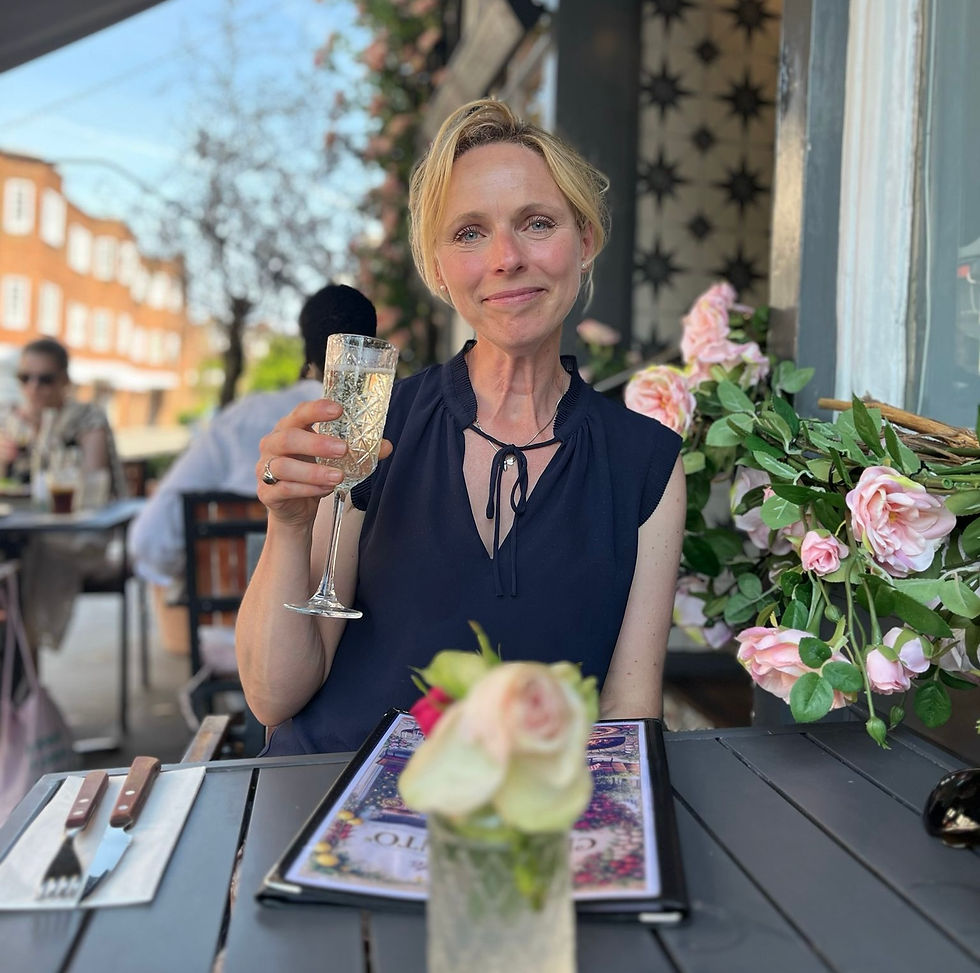
Me at 51, cheering you on!
Be patient with yourself.
I wanted to be able to do whatever it was that I was going to do anywhere in the world. This meant that I had to go digital. I still wanted to have an analog line to my business, but it was very important that I could do what I wanted to do with just some paints, my laptop and a wifi connection. I stumbled across surface pattern design because it would give me the freedom I was after and meant that I could monetise my art by getting it licensed. As much as I love painting, I decided that it would be really handy if I could actually make some money out of it because getting likes on Instagram does not pay the bills!
I started teaching myself Adobe Illustrator and Photoshop, working at it in any spare half hour I could find. It was hard and frustrating at times, but the more I did it the better I understood it and although I couldn’t afford the big bucks courses I found a way to learn the skills I needed through free workshops, and cheaper subscription options. I could have bitten the bullet and done it a faster way, but I learned so much more doing it this way and it suited me. My first patterns weren't good. My first attempt at a website was clumsy and amateurish, but I persevered with YouTube tutorials, Skillshare and finding people who already knew what I was trying to work out. There were enough early wins to spur me on and so I just kept going until I began to feel that I knew what I was doing and I felt more satisfied with the end result. It took a lot of patience, but I grew so much during that time. Spoiler alert: there is no such thing as a quick fix. We have a couple of signs in our house that say ‘Nothing worth having ever came easy’ and ‘She believed she could, so she did.’ And it was these two sayings that honestly kept me going.
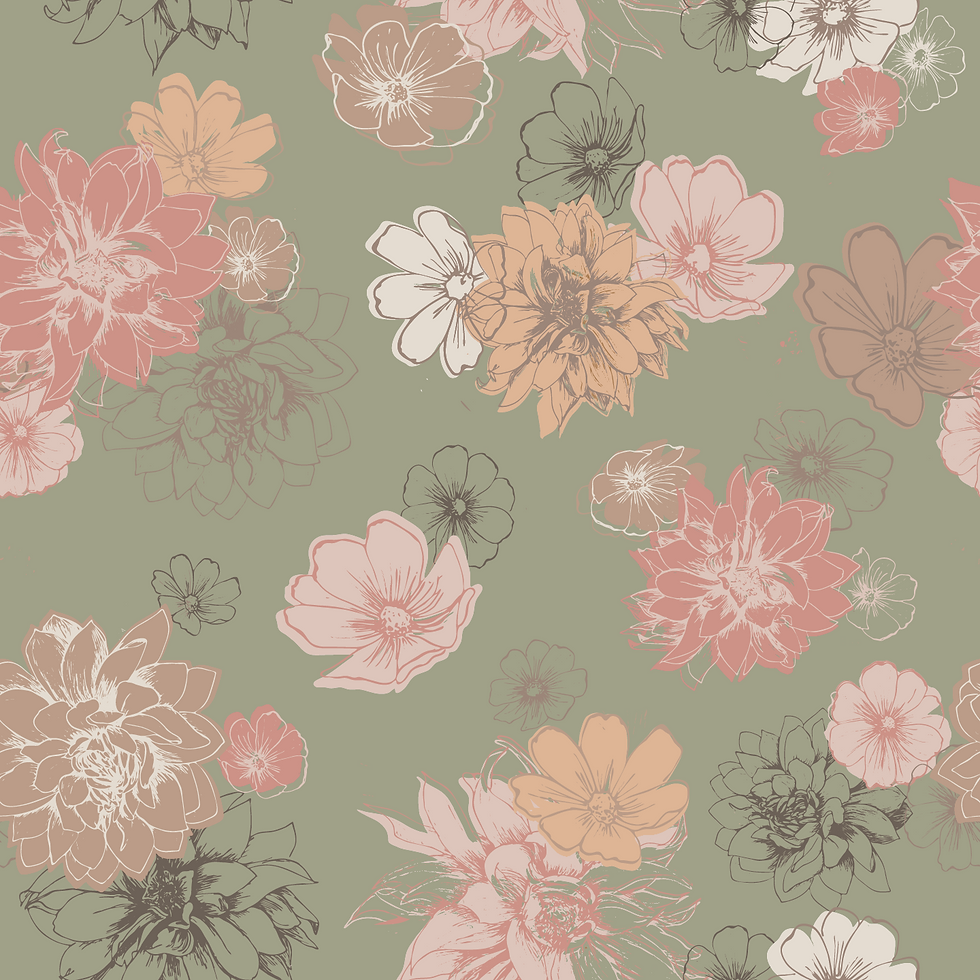
One of my first patterns!
Comparison is destructive. You are where you should be.
I could have looked at people ten years into this and felt behind. I could have looked at people my age who never stopped to retrain and wonder if I'd made things harder for myself than they needed to be. But the truth is, it took me to the age of 48 to work out what it was that I wanted to do and I don’t think it could have come any sooner because there was a sequence of events that led me to that point. Do not compare yourself to others, you have not done what someone else has done who was on their own timeline, with their own starting point. There isn't a schedule you're behind on, your own experiences have brought you to this point and you are exactly where you should be.
Just put one foot in front of the other, each day.
That's genuinely the whole method. Not a five-year plan, I didn't have one and still don't, really. I had an idea of what I wanted to do and I just put one foot in front of the other. Learning what I needed to know to get me to the next point. There was the work ahead of me for the day, and when that was done, tomorrow's was after that. Two years of a couple of hours here and a couple of hours there soon adds up.
Be strict with your time.
This one thing matters more than people realise. I run a regular workshop, a website, a Spoonflower shop, an Etsy shop, I have prints and originals to paint, patterns to make and ideas for new projects that haven't happened yet and might not for a while. I can't do all of it, all the time, and pretending otherwise is how nothing gets finished. I've had to be honest about what I can realistically give each task in a week, and let the rest wait its turn. But I am strict with my time. I protect my working time and set time limits for each task. Even though I have the luxury of working from home, I still work a working day albeit a working day that suits me so I may not start until 11.00am, but I will often work on to 9.00 or 10.00pm. So if you make the decision to follow your dream, it will have to be something you REALLY want to do because you will end up living and breathing it and if you don’t feel comfortable with that you may not be quite on the right path.
Invest in yourself. Learn.
The two years I spent learning the skills I needed weren't a detour from the real work, they were the real work. There's so much I can do now that I simply couldn't do before, and none of it arrived by accident. It cost time I had to actively find, and a willingness to be slow and a bit useless at something for a while, which can be an uncomfortable feeling. I feel like I am beginning to make real progress. Not because I've arrived anywhere, but because I can finally see the shape of where I'm headed. I still have much to learn, in fact, if you realise that early on it is a much less frustrating process.
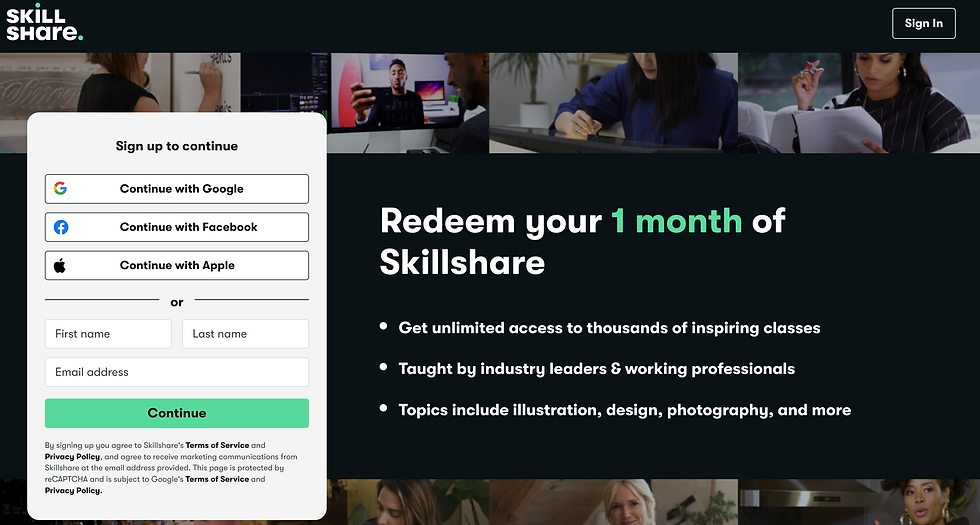
Skillshare was a lifesaver for me. I am not an affiliate, I just really rate it! (The 1 month free membership may not still be available, but there is usually some deal to get you started.)
Be kind to yourself.
Be kind to yourself and don’t set unachievable expectations. Much of what you will learn is not linear, you will peak and trough, fall down rabbit holes, be brilliant at some things and really rubbish at others. Celebrate the wins and be kind to yourself when things don’t go as you had hoped. Nothing is a fail, it is just an opportunity to learn. Have I made it? Nope, not at all. Have I made progress? Yes, bucket loads. Am I where I want to be? No, but I have learnt to enjoy every new challenge and the sense of achievement when I conquer them. I try not to look too far ahead and especially on the days when things are really hard, I look at how far I have come and give myself a little pat on the back. I am beginning to reap what I have sown. It has been a journey of discovery and a hugely satisfying one at that.

Some of the patterns from my first collection, 'Wayfare & Wilding'
Somethings to take away with you:
If you know what you love, start, or at least start the process that will help you achieve it. There is no right time and you don’t need permission just start.
Patience beats speed. Research, imagination and trial and error do the work.
Comparison steals more than it gives. You're not behind; you're exactly where you need to be.
Progress is daily, not reaching a goal in five year’s time. One foot in front of the other is the whole method.
Protect your time fiercely. You can't do everything at once, and you don't have to.
Investing in learning something new is never wasted, however slow it feels at the time.
Don't be afraid to ask for help. That might be cashing in on a favour for help with looking after the kids or asking your family to give you an hour to focus. Asking for help is not a sign of weakness, it is a superpower that will help you achieve your goals.
One final point, it can take ten years to become an overnight success and slow and steady wins the race (ok, I know, that’s two!) Good luck, I’m rooting for you!
See my latest venture that is really beginning to gain momentum here.

Comments